Title: Drawing generation speed optimisation · Issue #3072 · IfcOpenShell/IfcOpenShell · GitHub
Open Graph Title: Drawing generation speed optimisation · Issue #3072 · IfcOpenShell/IfcOpenShell
X Title: Drawing generation speed optimisation · Issue #3072 · IfcOpenShell/IfcOpenShell
Description: Just to start the conversation, drawing generation is awesome, but still quite slow. For example, in the Revit sample model, a roof plan (which is simpler than other plans) takes nearly 4 minutes(!). After hiding two problematic high pol...
Open Graph Description: Just to start the conversation, drawing generation is awesome, but still quite slow. For example, in the Revit sample model, a roof plan (which is simpler than other plans) takes nearly 4 minutes(!...
X Description: Just to start the conversation, drawing generation is awesome, but still quite slow. For example, in the Revit sample model, a roof plan (which is simpler than other plans) takes nearly 4 minutes(!...
Opengraph URL: https://github.com/IfcOpenShell/IfcOpenShell/issues/3072
X: @github
Domain: github.com
IPv4 address: 140.82.114.4
{"@context":"https://schema.org","@type":"DiscussionForumPosting","headline":"Drawing generation speed optimisation","articleBody":"Just to start the conversation, drawing generation is awesome, but still quite slow. For example, in the Revit sample model, a roof plan (which is simpler than other plans) takes nearly 4 minutes(!). After hiding two problematic high polycount meshes, I've got the time down to 25s on my machine, but still, 25 seconds is pretty long for what the user perceives as being a pretty empty plan.\r\n\r\nNote that I'm only feeding in objects within the camera range (e.g. the top floor of the building, not the lower 3 floors) into the geometry iterator / drawing serialiser. What types of strategies might be done to make things faster?\r\n\r\nHere's what Mr. ChatGPT has to say:\r\n\r\n> I am building software that uses OpenCascade to create a HLR vector drawing of a building. However, the processing time is quite slow. What strategies might be used to speed it up?\r\n> \r\n> Optimizing performance in a software that uses OpenCascade for creating hidden line removal (HLR) vector drawings can be a challenge. However, there are several strategies that you can employ to speed up the processing time:\r\n> \r\n> 1. Optimize geometry: Simplify your building model by reducing the number of faces, edges, and vertices. Remove any unnecessary or overly detailed features, and merge or eliminate coplanar faces. This will reduce the computation complexity for HLR algorithms.\r\n> 1. Use Level of Detail (LOD): Implement different levels of detail for your building model, where each level is a simplified version of the original. Select the appropriate LOD based on the zoom level or distance from the camera, which will reduce the amount of data being processed in the HLR algorithm.\r\n> 1. Optimize the HLR algorithm: Profile and analyze the performance of the HLR algorithm you're using to identify any bottlenecks. Once identified, optimize those areas of the code by employing efficient data structures, parallel processing, or better algorithms.\r\n> 1. Parallel processing: Utilize multi-threading or GPU acceleration to distribute the computation tasks across multiple cores or processing units. OpenCascade supports parallel processing, which can significantly speed up your HLR operations.\r\n> 1. Caching and reusing data: Cache intermediate results when possible, and reuse them when generating HLR images from similar viewpoints. This can save time by avoiding redundant calculations.\r\n> 1. Adaptive HLR: Implement an adaptive HLR algorithm that adjusts the level of detail based on the size of the features in the view. This can help reduce the processing time by avoiding unnecessary calculations for small, insignificant features.\r\n> 1. Occlusion culling: Use occlusion culling techniques to exclude objects or parts of objects that are not visible from the current viewpoint. This can help reduce the number of objects being processed in the HLR algorithm.\r\n> 1. Optimize data structures: Use efficient data structures for storing and accessing the geometry data to reduce memory overhead and improve performance.\r\n> 1. Batch processing: If possible, batch process multiple HLR operations together, which can lead to better utilization of hardware resources.\r\n> 1. Optimize hardware and software configurations: Ensure that your hardware meets the requirements for OpenCascade and that your software is configured correctly for optimal performance. Update your drivers and libraries as needed.\r\n> \r\n> Remember that the effectiveness of these strategies may vary based on the specifics of your software and building models. You might need to experiment with different approaches and combinations to find the best optimization for your application.\r\n\r\nThoughts?\r\n\r\n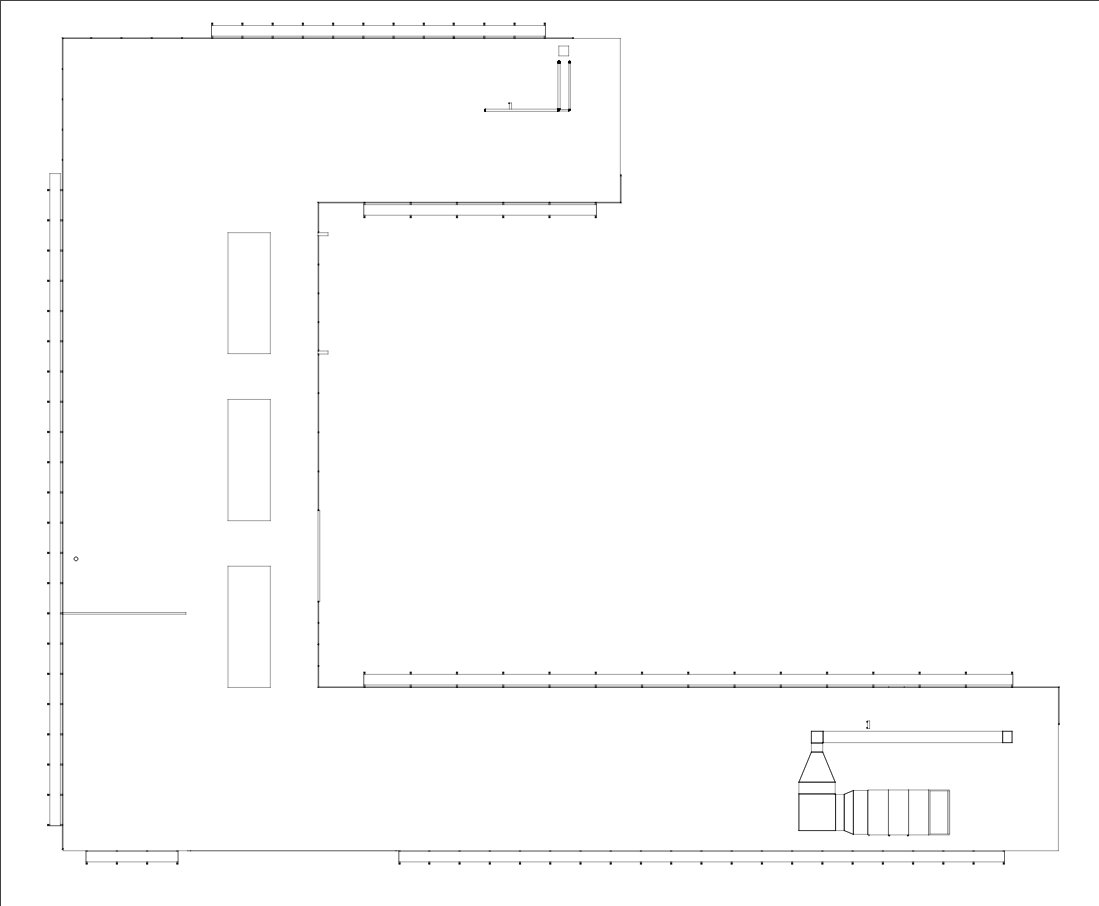\r\n","author":{"url":"https://github.com/Moult","@type":"Person","name":"Moult"},"datePublished":"2023-04-29T11:06:17Z","url":"https://github.com/IfcOpenShell/IfcOpenShell/issues/3072"}| react-profiling | 0 |
| react-import-map | react,react-dom,react-dom/client,react-dom/profiling,react-is,react/compiler-runtime,react/jsx-dev-runtime,react/jsx-runtime,scheduler@b8488ee2c322 |
| route-pattern | /_view_fragments/issues/show/:user_id/:repository/:id/issue_layout(.:format) |
| route-controller | voltron_issues_fragments |
| route-action | issue_layout |
| fetch-nonce | v2:7904a7b0-91c5-cde3-26f6-64f29b5526b8 |
| current-catalog-service-hash | 81bb79d38c15960b92d99bca9288a9108c7a47b18f2423d0f6438c5b7bcd2114 |
| request-id | EACE:154661:70D454:9A83E2:6B047813 |
| html-safe-nonce | 0f33e65f92211bd0b3a00af536c4d682854c976cfdab595491e93c195b34b476 |
| visitor-payload | eyJyZWZlcnJlciI6IiIsInJlcXVlc3RfaWQiOiJFQUNFOjE1NDY2MTo3MEQ0NTQ6OUE4M0UyOjZCMDQ3ODEzIiwidmlzaXRvcl9pZCI6Ijg1MDYxNzIzNTA1ODc1MDA1NjMiLCJyZWdpb25fZWRnZSI6ImlhZCIsInJlZ2lvbl9yZW5kZXIiOiJpYWQifQ== |
| visitor-hmac | b85d208d4edfa438b6401ae7e2ccf4f45955f140438a3341ab8d3004d8fa6cc2 |
| hovercard-subject-tag | issue:1689522544 |
| github-keyboard-shortcuts | repository,issues,copilot |
| google-site-verification | Apib7-x98H0j5cPqHWwSMm6dNU4GmODRoqxLiDzdx9I |
| octolytics-url | https://collector.github.com/github/collect |
| analytics-location | / |
| fb:app_id | 1401488693436528 |
| apple-itunes-app | app-id=1477376905, app-argument=https://github.com/_view_fragments/issues/show/IfcOpenShell/IfcOpenShell/3072/issue_layout |
| twitter:image | https://opengraph.githubassets.com/0d3d2048737092cd0a044d434214b7eafddd198d31033e5eb4a8922980e4c0b1/IfcOpenShell/IfcOpenShell/issues/3072 |
| twitter:card | summary_large_image |
| og:image | https://opengraph.githubassets.com/0d3d2048737092cd0a044d434214b7eafddd198d31033e5eb4a8922980e4c0b1/IfcOpenShell/IfcOpenShell/issues/3072 |
| og:image:alt | Just to start the conversation, drawing generation is awesome, but still quite slow. For example, in the Revit sample model, a roof plan (which is simpler than other plans) takes nearly 4 minutes(!... |
| og:image:width | 1200 |
| og:image:height | 600 |
| og:site_name | GitHub |
| og:type | object |
| og:author:username | Moult |
| hostname | github.com |
| expected-hostname | github.com |
| None | 9c099f1b85def81ca352464c276510dfef32deaf3c305404e65b8d270284a58b |
| turbo-cache-control | no-preview |
| go-import | github.com/IfcOpenShell/IfcOpenShell git https://github.com/IfcOpenShell/IfcOpenShell.git |
| octolytics-dimension-user_id | 13692563 |
| octolytics-dimension-user_login | IfcOpenShell |
| octolytics-dimension-repository_id | 40473201 |
| octolytics-dimension-repository_nwo | IfcOpenShell/IfcOpenShell |
| octolytics-dimension-repository_public | true |
| octolytics-dimension-repository_is_fork | false |
| octolytics-dimension-repository_network_root_id | 40473201 |
| octolytics-dimension-repository_network_root_nwo | IfcOpenShell/IfcOpenShell |
| turbo-body-classes | logged-out env-production page-responsive |
| disable-turbo | false |
| browser-stats-url | https://api.github.com/_private/browser/stats |
| browser-errors-url | https://api.github.com/_private/browser/errors |
| release | cf73f57448d52b3a7b619195e182b33d3b3454ca |
| ui-target | full |
| theme-color | #1e2327 |
| color-scheme | light dark |
| react-app-name | issues |
Links:
| Server | github.com |
| Content-Type | text/html; charset=utf-8 |
| Cache-Control | max-age=0, private, must-revalidate |
Viewport: width=device-width
